Running at Flooring Liquidators Canada.
Flooring Liquidators Canada — 16 locations, 44 employees — uses RUENGINE to manage sales, staff and daily operations, with a setup built around its flooring business.
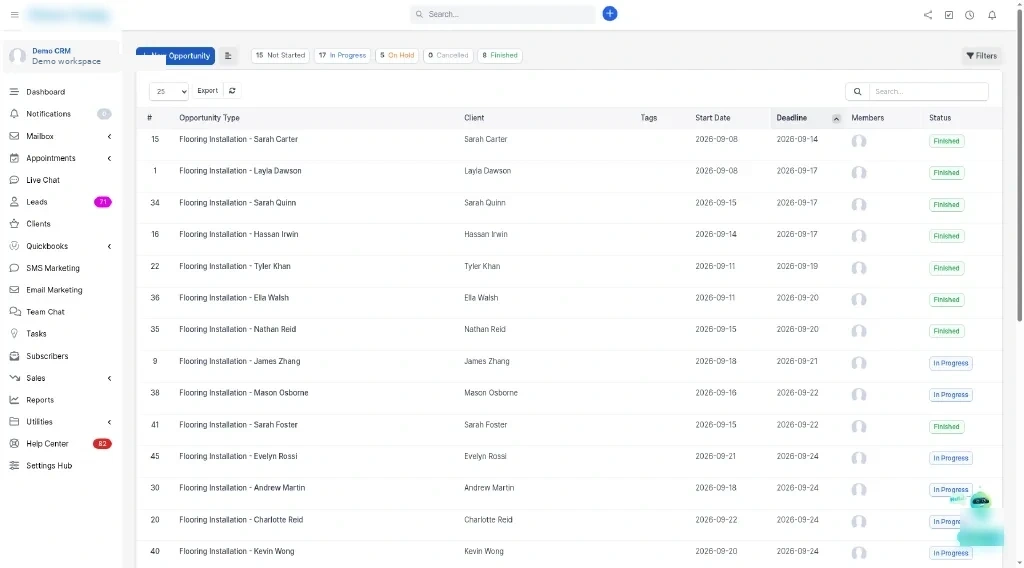
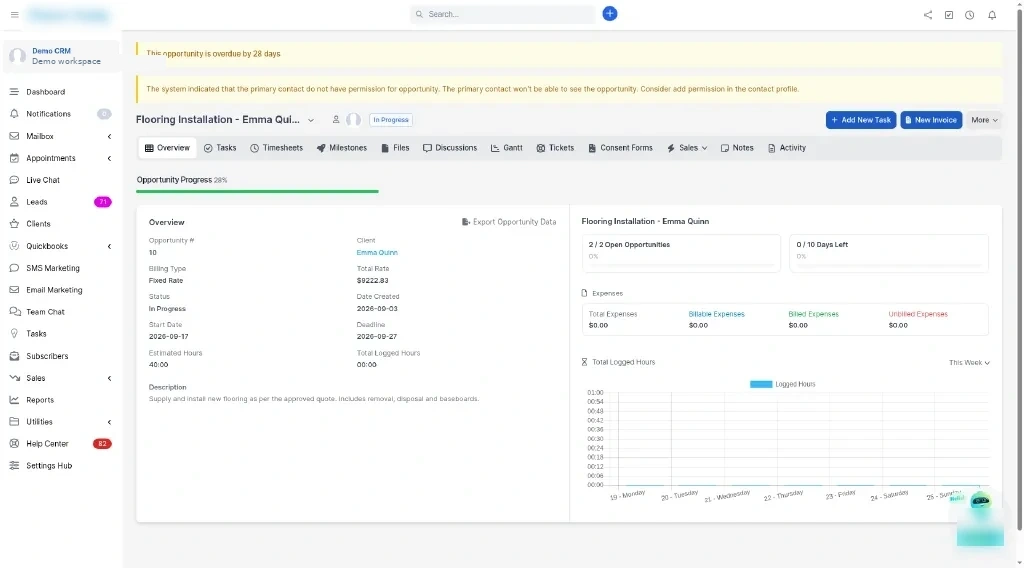
Screens show illustrative demo data, not customer results.
Before → After
| Area | Before | After |
|---|---|---|
| Time & attendance | A $5,000+/year time-clock app | One employee portal — the time-clock subscription is gone |
| Requests & support | Requests buried in texts and chats | Every request a tracked ticket: 129 tracked, 118 closed |
| Training | Shadowing whoever was on shift, every store its own way | One Training Center — easier onboarding and offboarding, same videos, quizzes and certificates at every store |
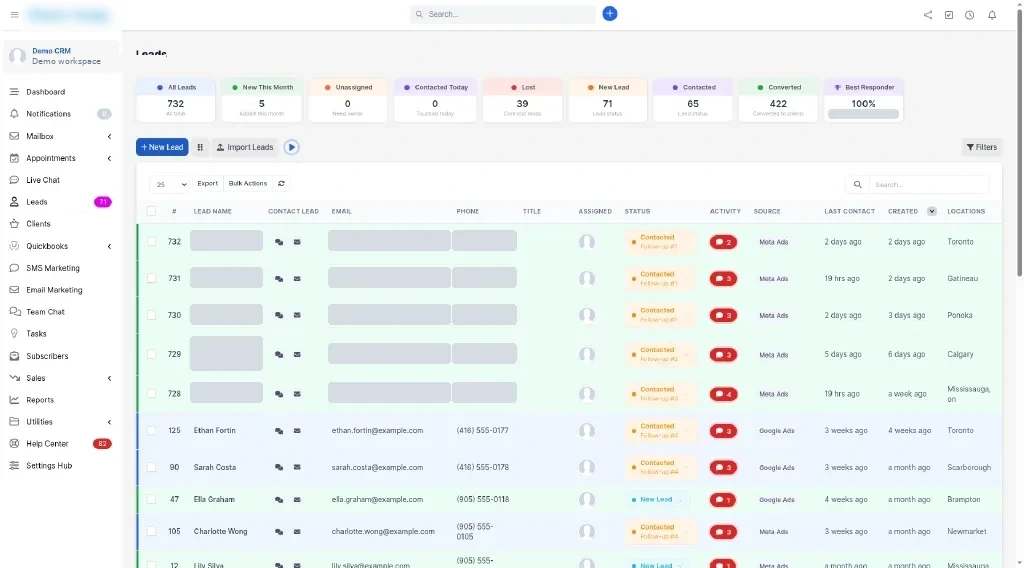
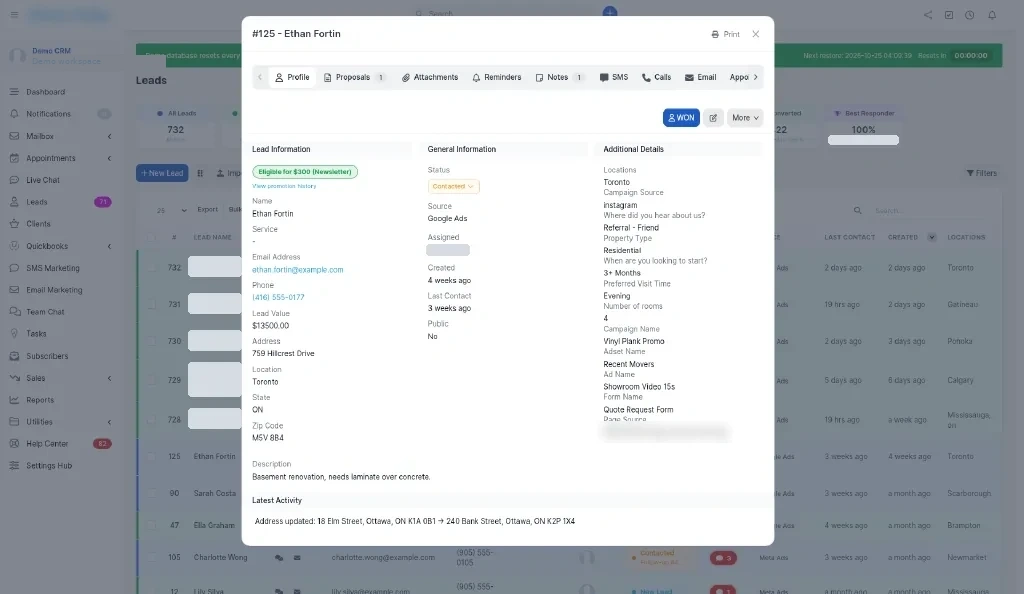
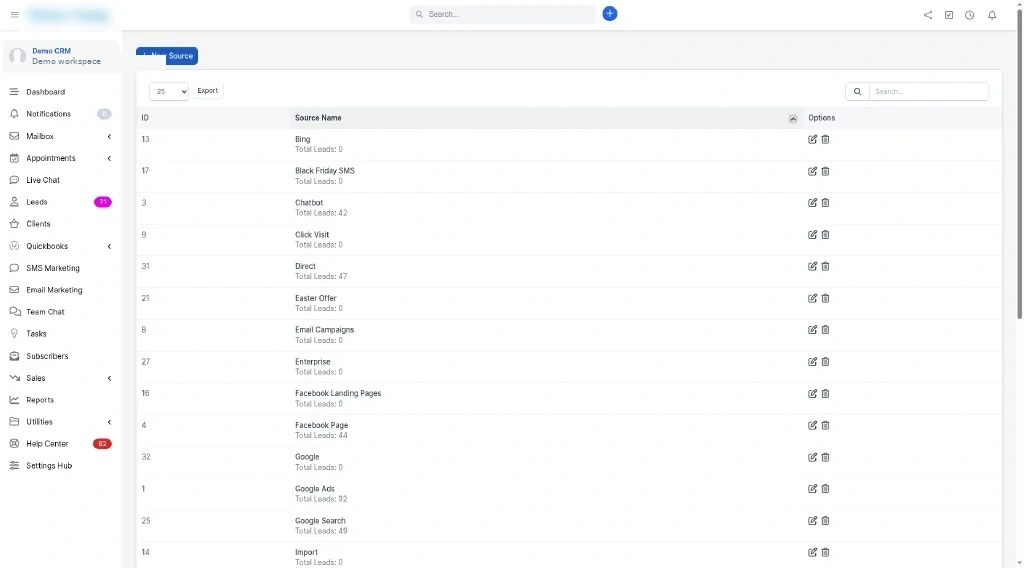
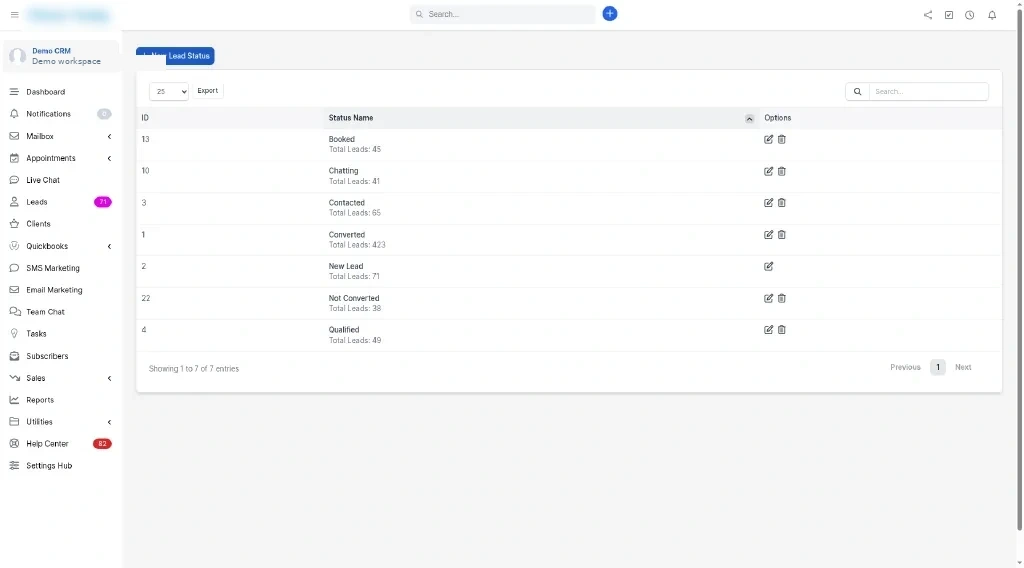
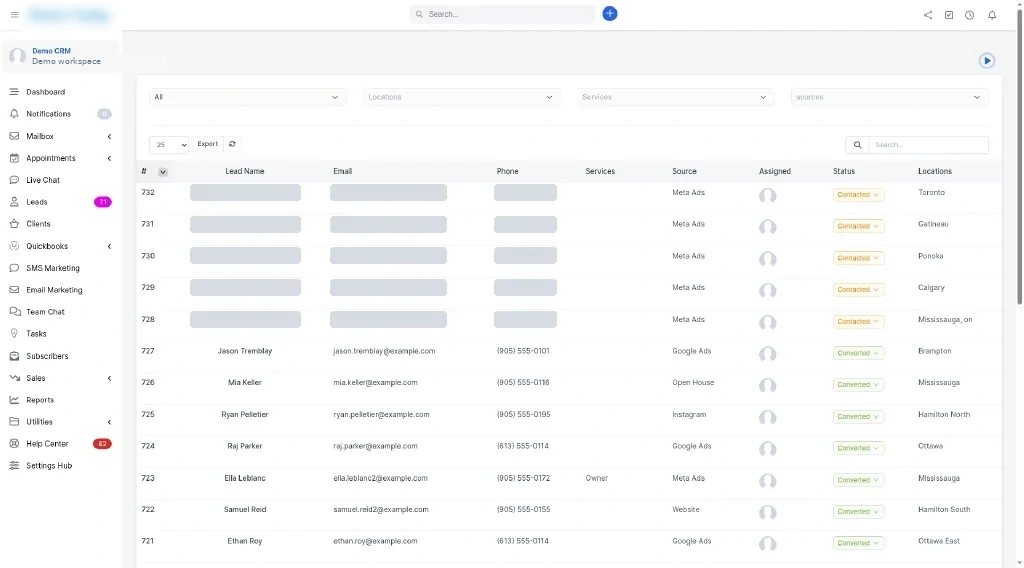
| Lead management | Each store kept its own leads; head office couldn't see the pipeline | Every lead in the CRM with a source, status, owner and next step |
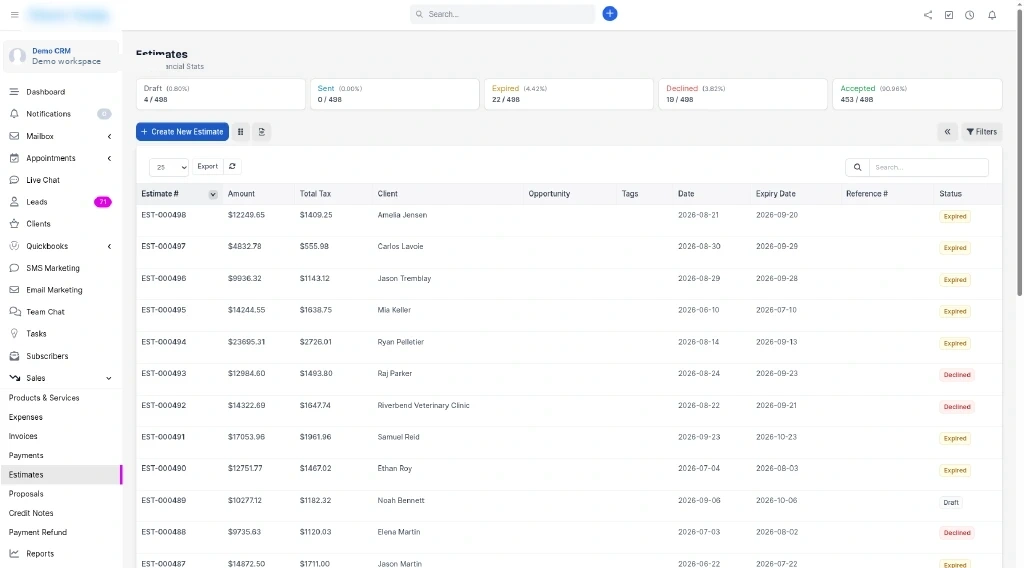
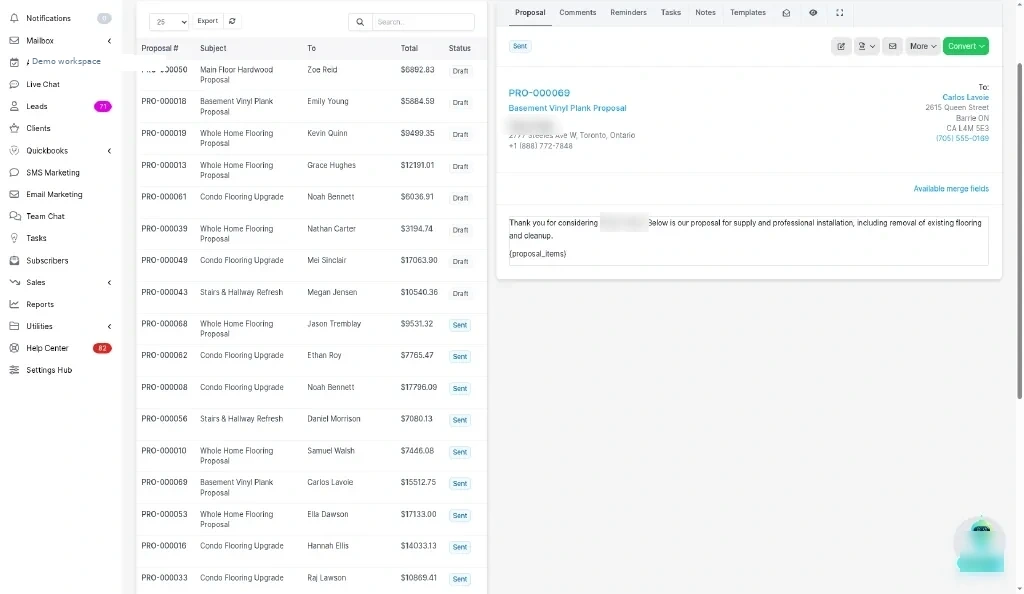
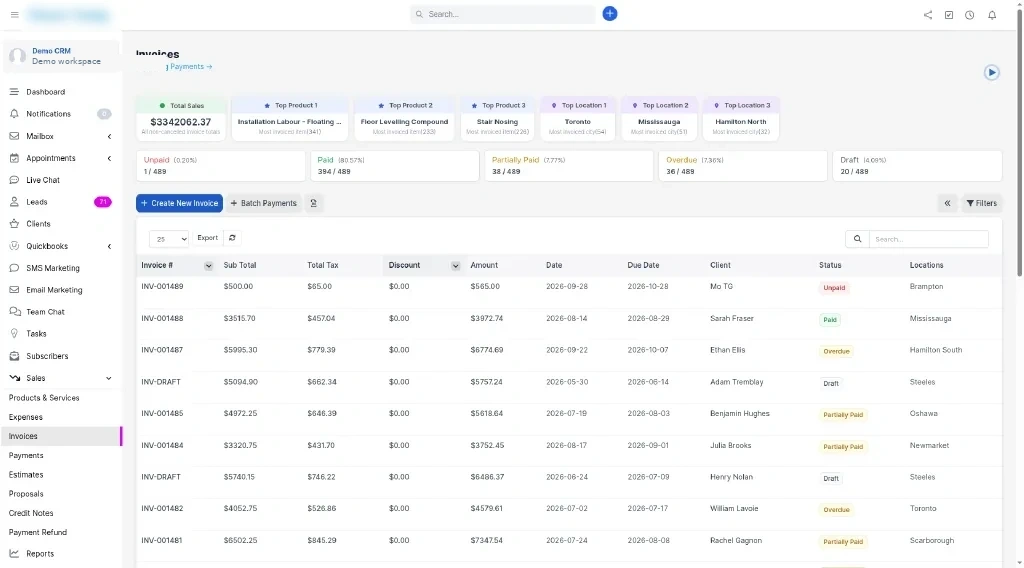
| Quotes & invoicing | A quote written at one store was invisible at the others | Estimates, proposals and invoices on one CRM record; store POS integrated |
| Tasks & projects | Head office chased updates store by store, by phone | 115 tasks and 16 projects in one place, with owners and status |
The problem
"We were paying over $5,000 a year just for time clocks, and everything else — schedules, requests, training — ran on texts and a shared spreadsheet. Now it all runs in one system."
Moe Tehaili, Founder, Flooring Liquidators Canada
What they stopped paying for
- A previous CRM~$14,400/yr
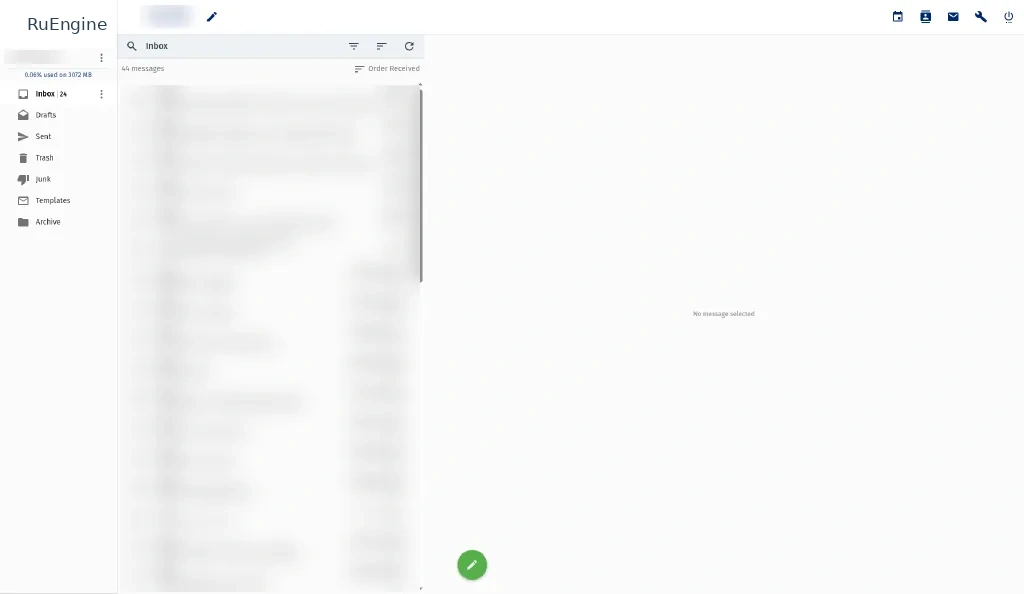
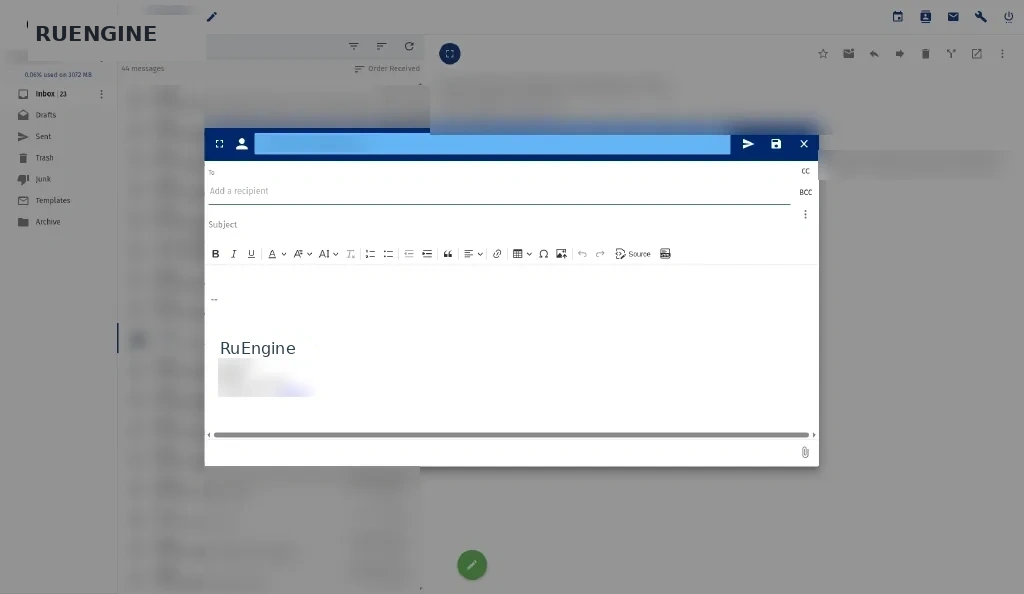
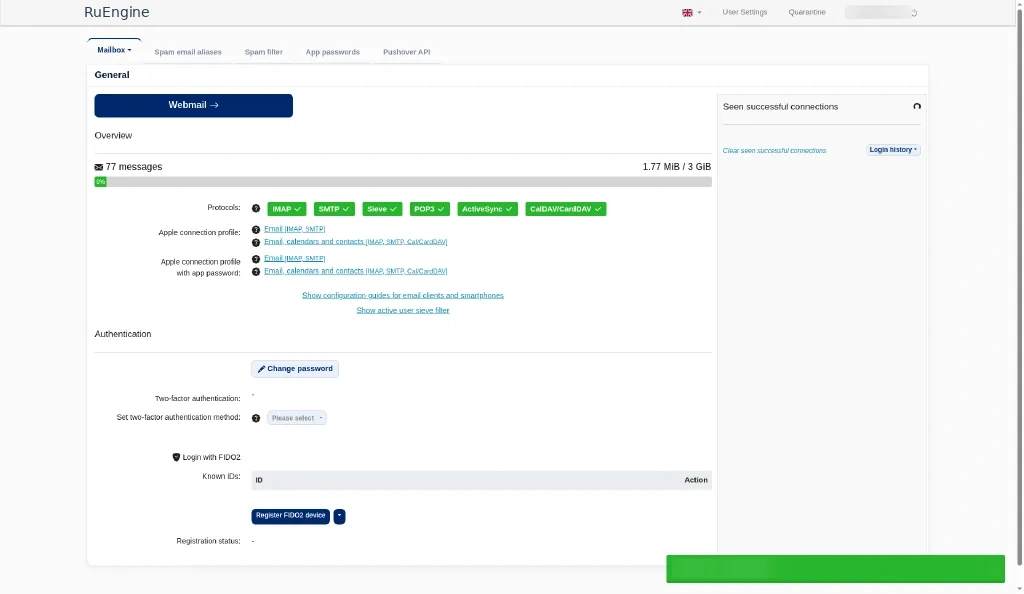
- A business email suite — replaced by RUENGINE's own workspace suite (SSL email, storage, office apps, PDF tools)~$12,000/yr → ~$3,000/yr
- A task & project appover $6,000/yr
- An integration tool~$6,000/yr
- A time-clock appover $5,000/yr
- An email marketing tool~$1,200/yr
- Team chat appunder $1,000/yr
About $42,000 a year saved on subscriptions.
Sales side
Lead management
Problem: each store kept its own leads from calls and walk-ins; no central tracking, head office couldn't see the pipeline.
Changed: every lead lands in the CRM with a source, a status, an owner and a next step.
Effect: any lead, at any store, in one place.
Follow-up
Problem: follow-up depended on each salesperson's memory and sticky notes.
Changed: follow-up sequences and reminders run from the CRM.
Effect: no lead depends on one person's memory; every open quote has a next step.
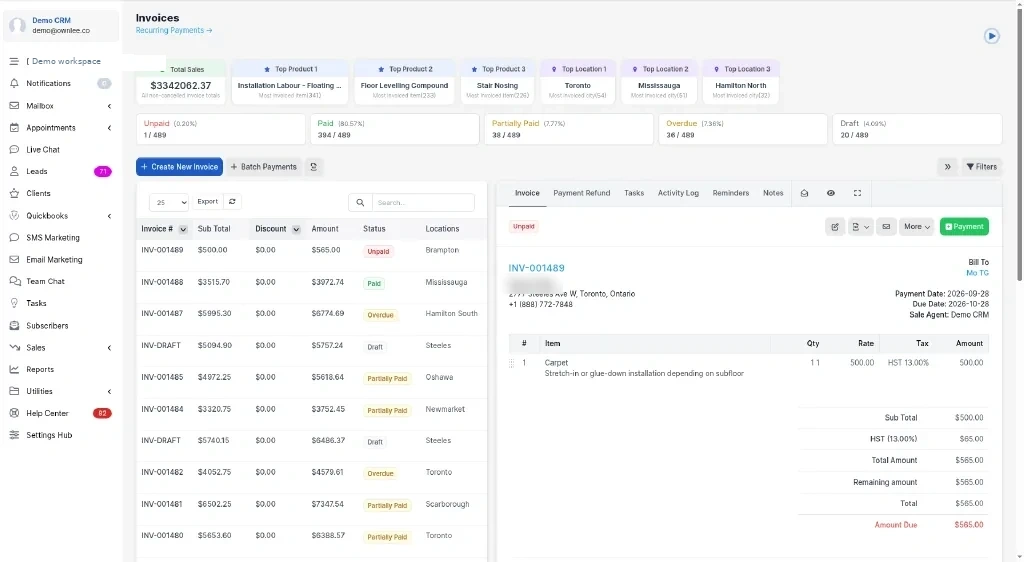
Quotes & invoicing
Problem: quotes and invoices were done at each store's point-of-sale, store by store — a quote written at one store was invisible at the others.
Changed: estimates, proposals and invoices live on the same CRM record, with the store POS integrated.
Effect: a customer's quote, sale and invoice in one place.
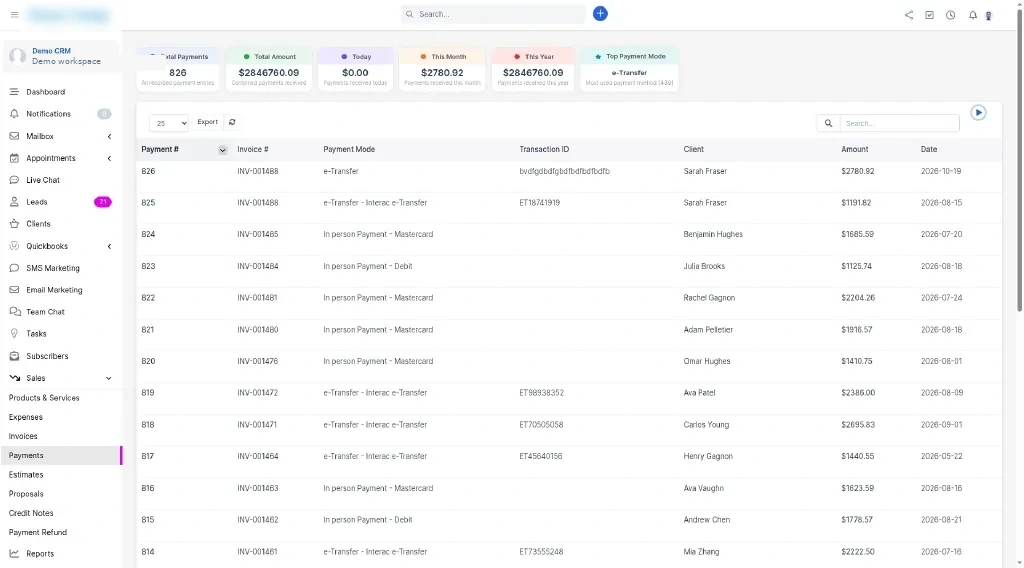
Reporting & visibility
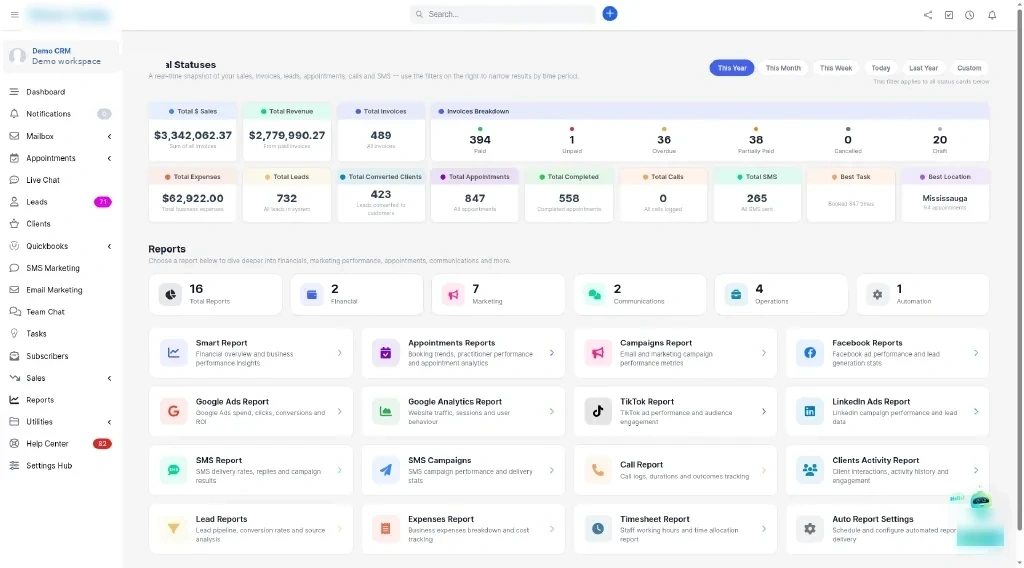
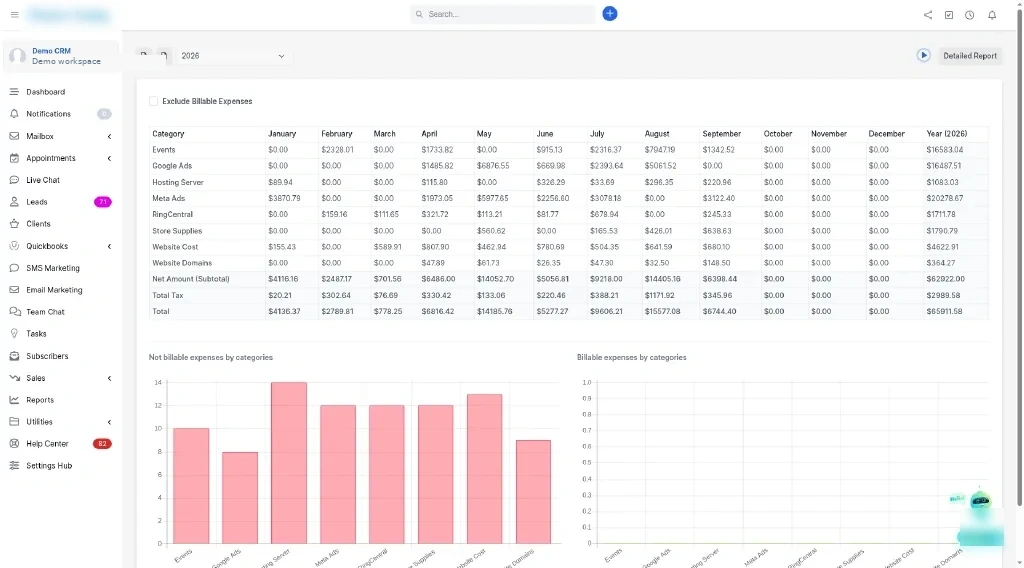
Problem: head office waited for each store to send its numbers; it was month-end before anyone saw the full picture.
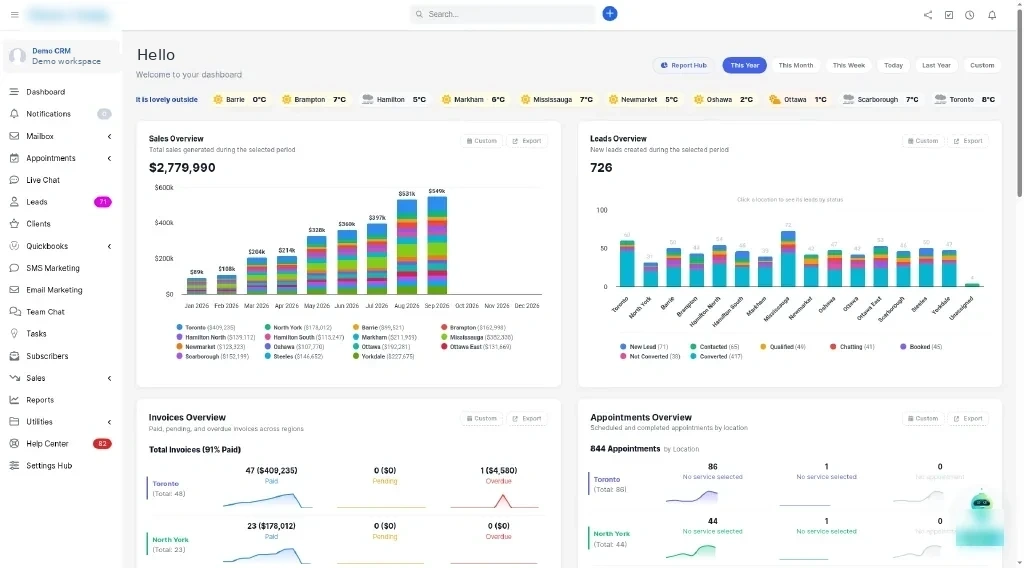
Changed: sales, invoices and reports in one system across all locations.
Effect: head office sees the whole chain's numbers in one view, live — not a month later.
Appointments & measures
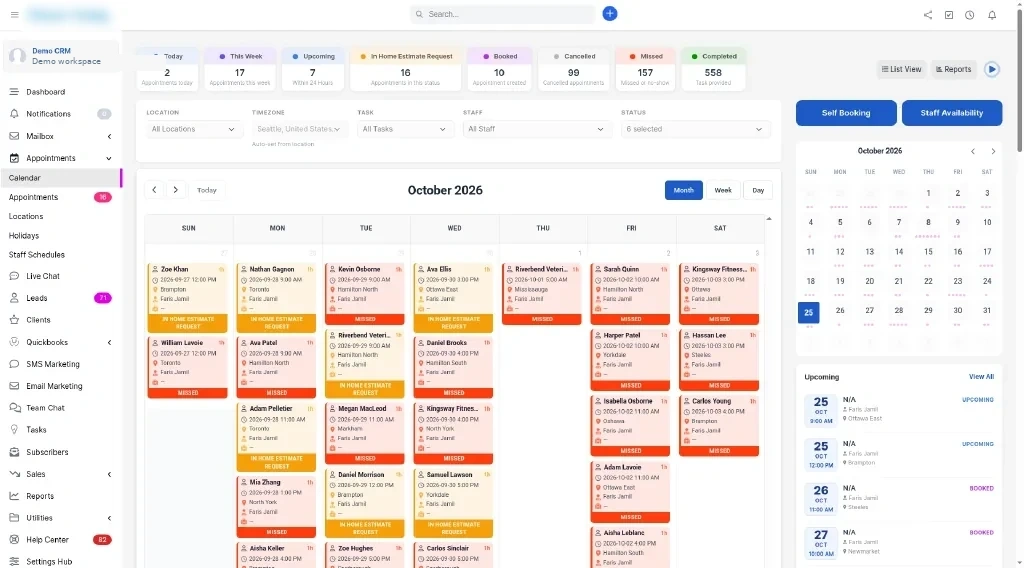
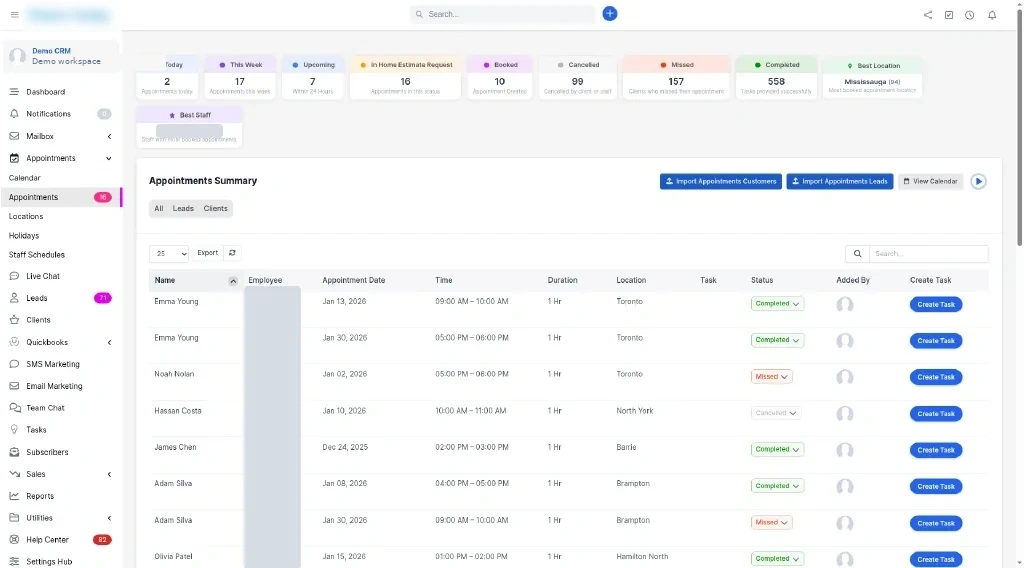
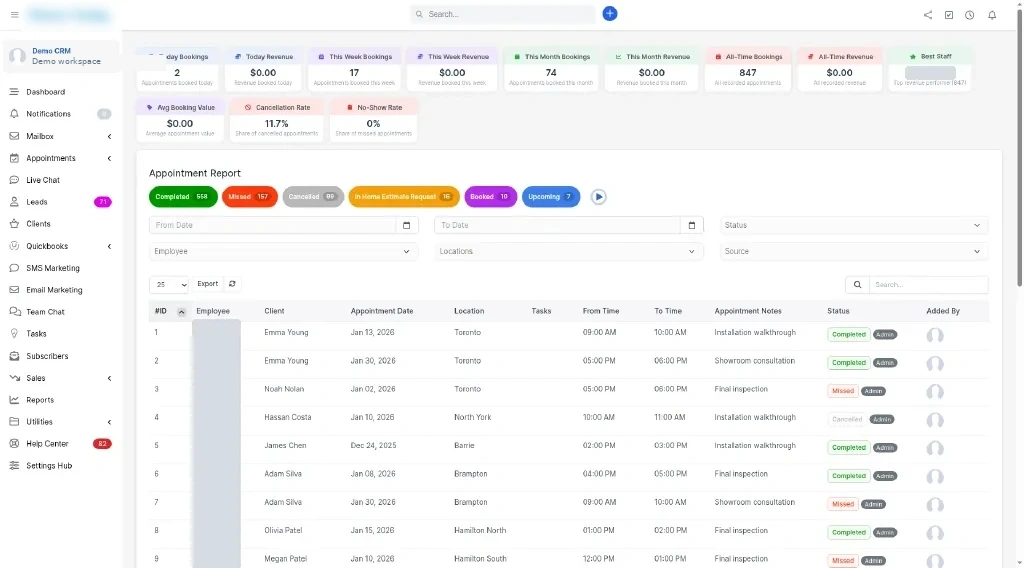
Problem: each store kept its own digital calendar, separate from everything else — a booking wasn't connected to the lead or the quote.
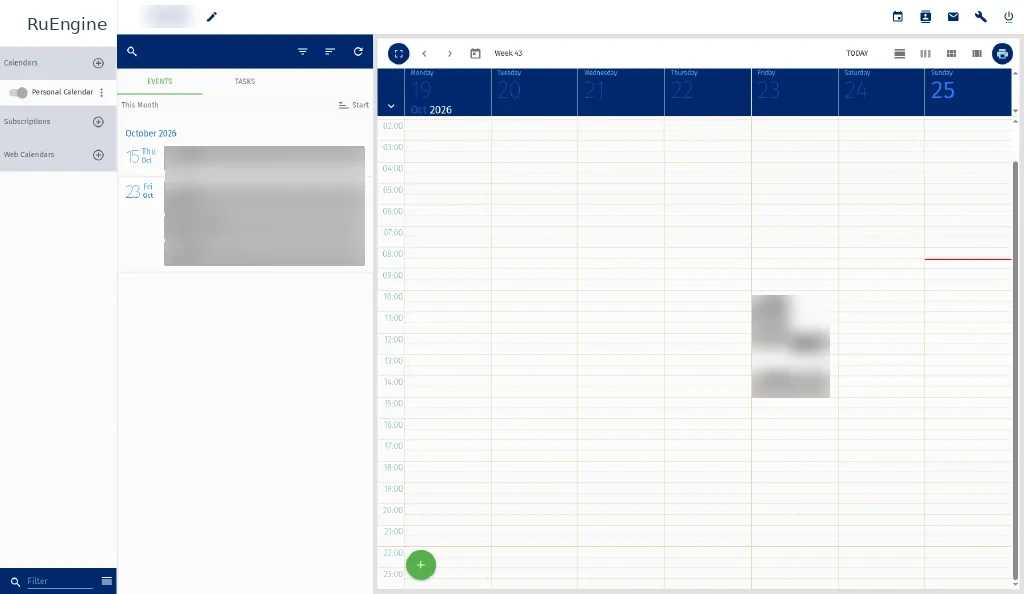
Changed: appointments and measures are booked in the CRM, on the customer's record.
Effect: the measure, the quote and the invoice tell one story.
Inventory & warehouse
Problem: stock lived in each store's POS — no chain-wide view of what was where.
Changed: stock and warehouse run in the system.
Effect: stores check what's available across the chain.
Customer marketing
Problem: there was no real customer list in one place, so campaigns barely happened. Integrations between tools were held together with an integration tool at ~$500 a month.
Changed: the customer base lives in the CRM; SMS and email campaigns run from the same records as the sales.
Effect: chain-wide campaigns, sent from one list. With social and marketing in the same system, the chain tracks its spend, cost per lead and closing percentage — and can see who closes more leads and who responds fastest.
People / portal side
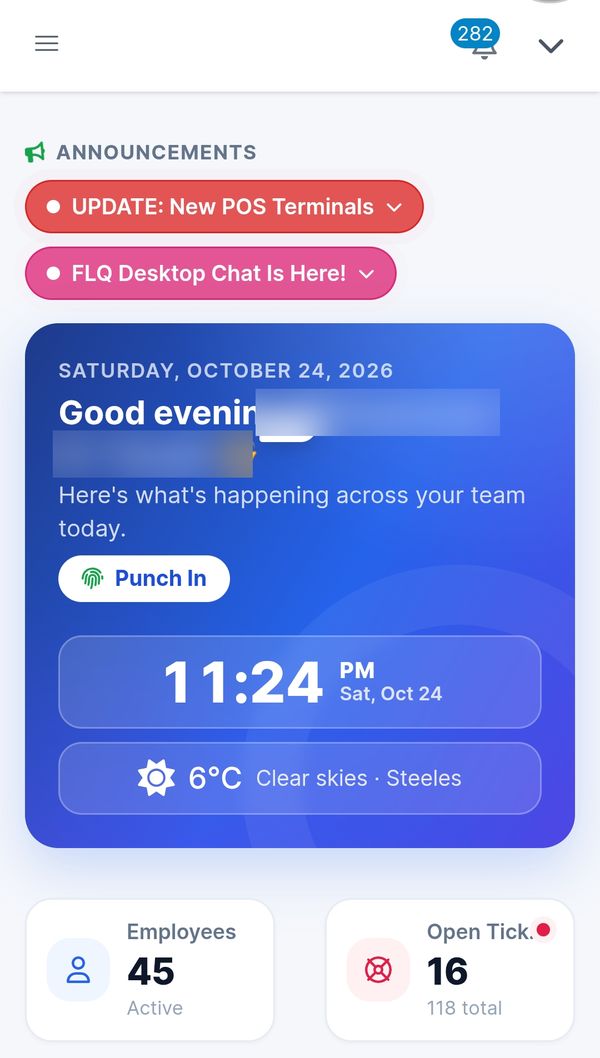
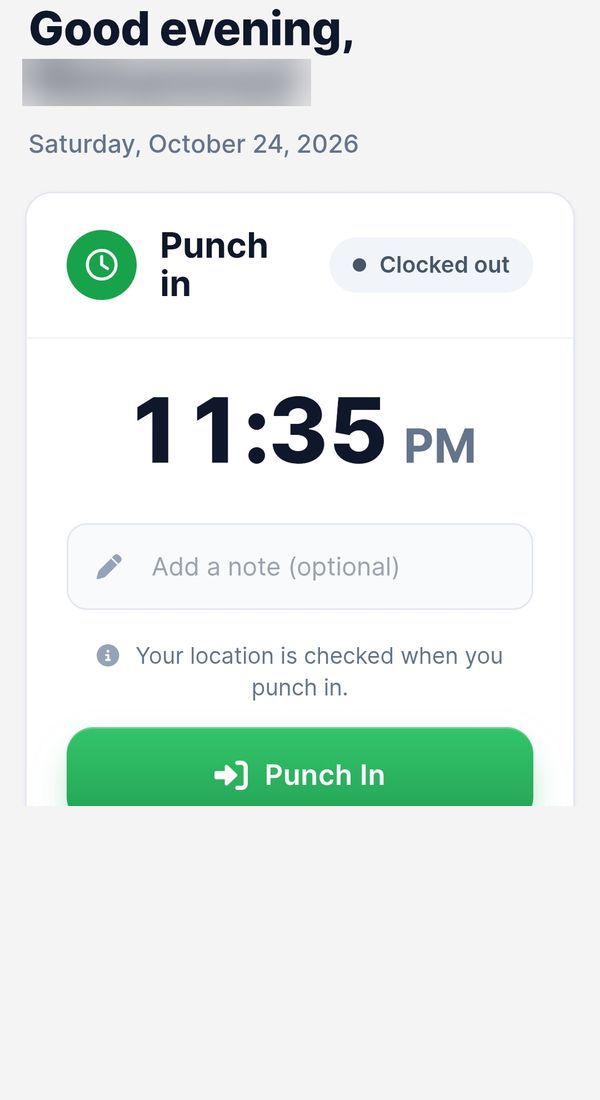
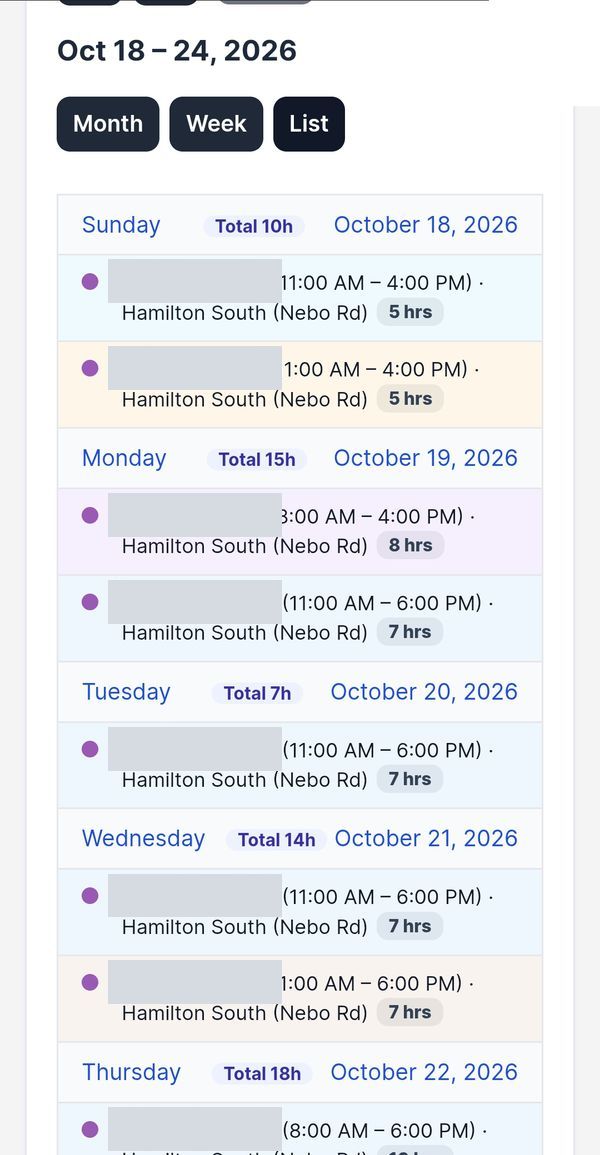
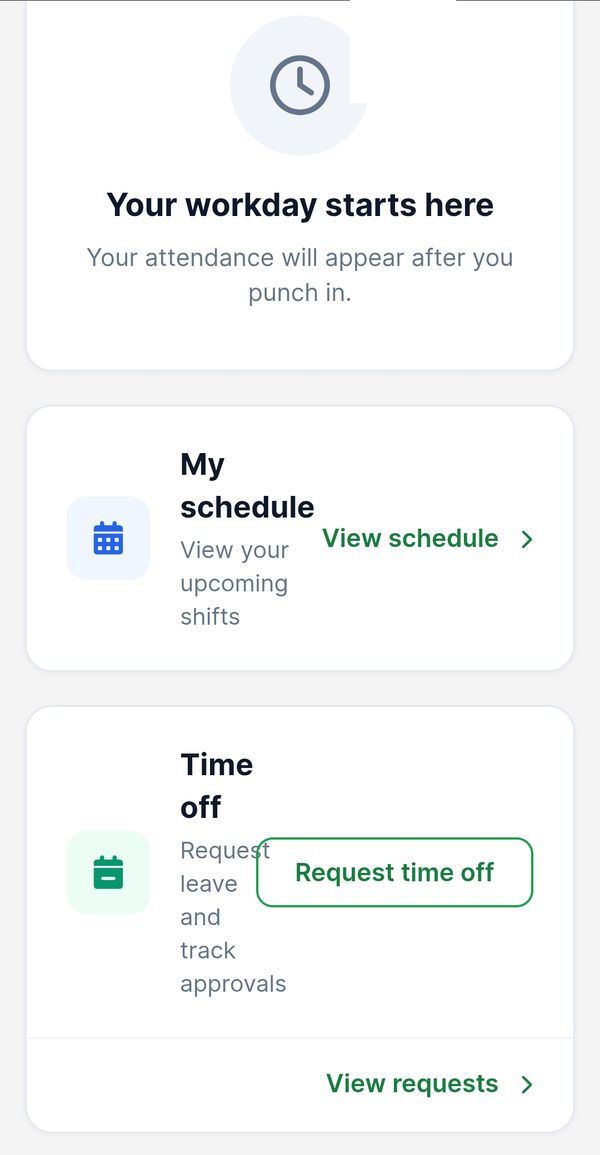
Time & attendance
Problem: a time-clock app, $5,000+/yr, one tool doing one job.
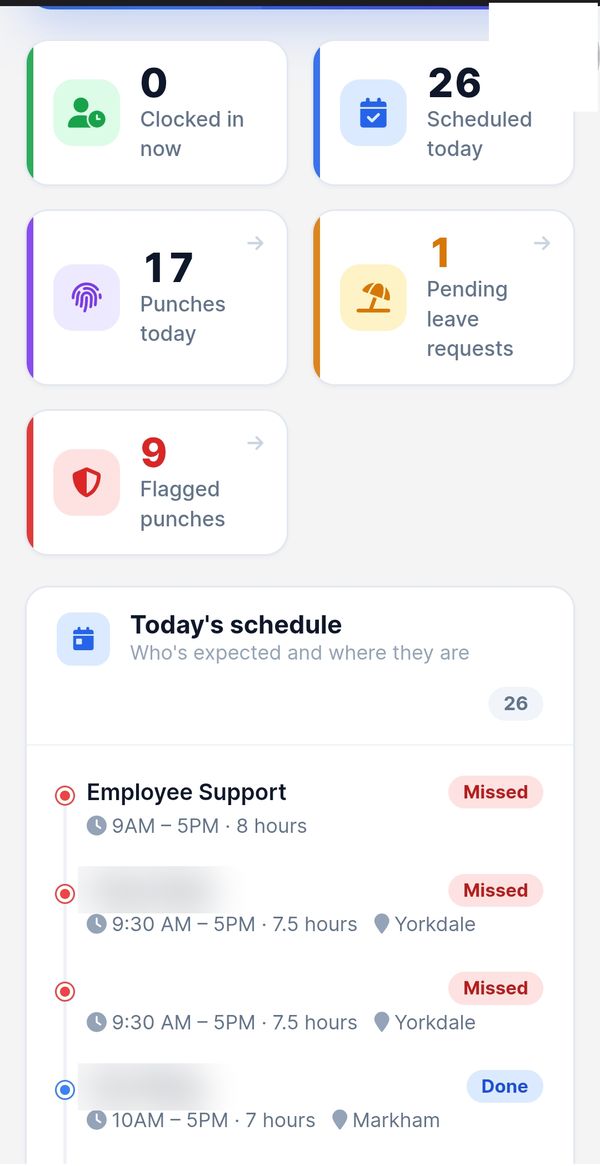
Changed: clock-ins, schedules, timesheets and leave inside the portal.
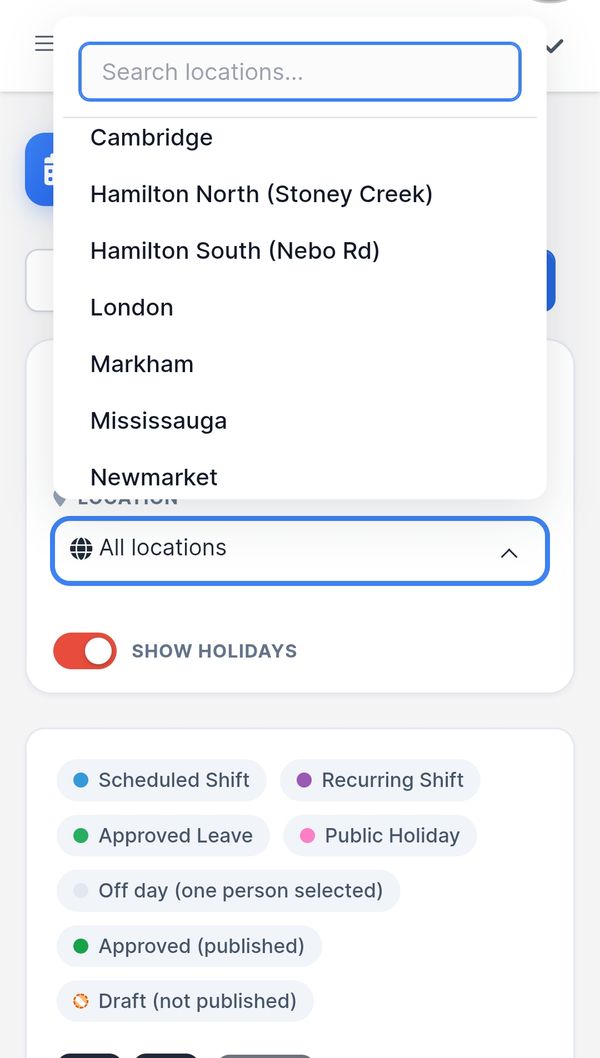
Effect: subscription gone; every store's shifts in one place.
Support tickets
Problem: requests by text/chat got buried; if nobody saw it, it didn't exist.
Changed: every request is a ticket with an owner and a status.
Effect: 129 tracked, 118 closed.
Training
Problem: each store trained its own way, shadowing whoever was on shift.
Changed: one Training Center covering onboarding, training and offboarding — same materials, videos, quizzes and certificates everywhere.
Effect: easier, streamlined onboarding and offboarding; every hire learns the same way at every store.
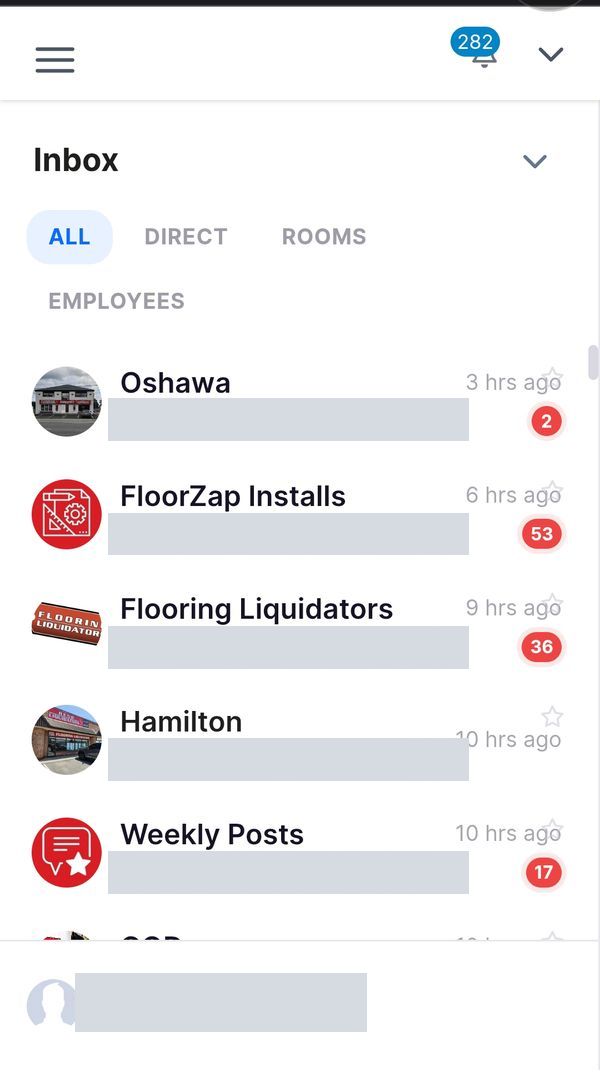
Announcements & communication
Problem: group chats/texts, no guarantee anyone saw them.
Changed: announcements, team chat and SMS in the portal.
Effect: 1,087 SMS in a 30-day period; head office knows messages reach everyone.
Help centre
Problem: every how-to question was another message to head office.
Changed: 36-article self-serve Support Center.
Effect: staff find answers themselves.
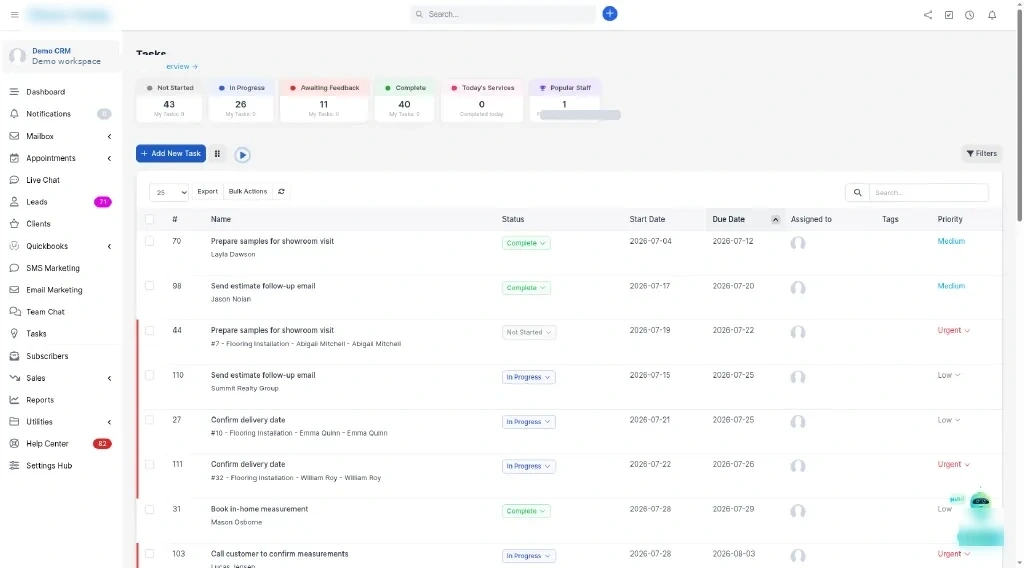
Tasks & projects
Problem: head office chased updates store by store by phone.
Changed: tasks and projects in the portal with owners and status.
Effect: 115 tasks and 16 projects in one place.
Closing story
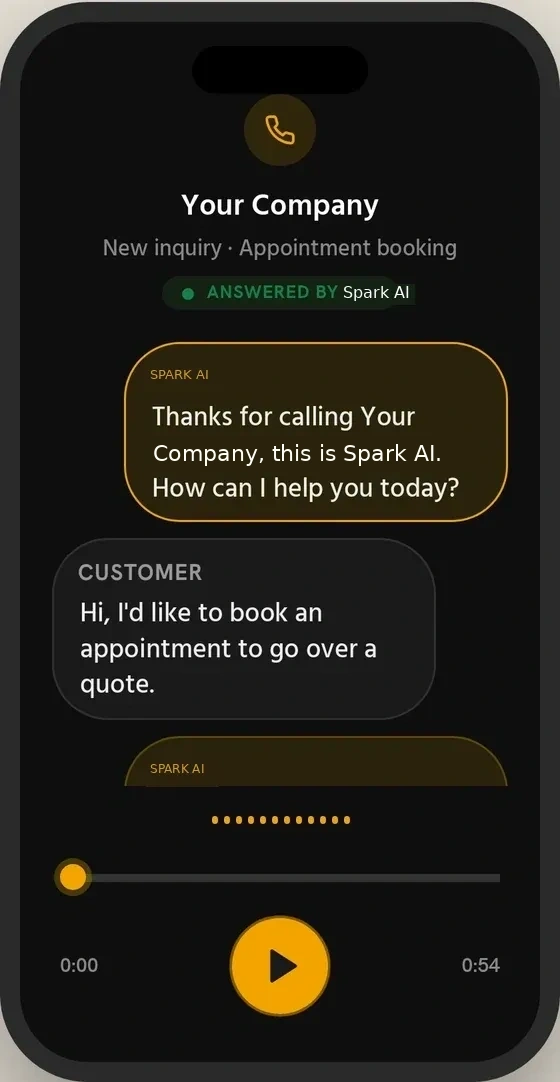
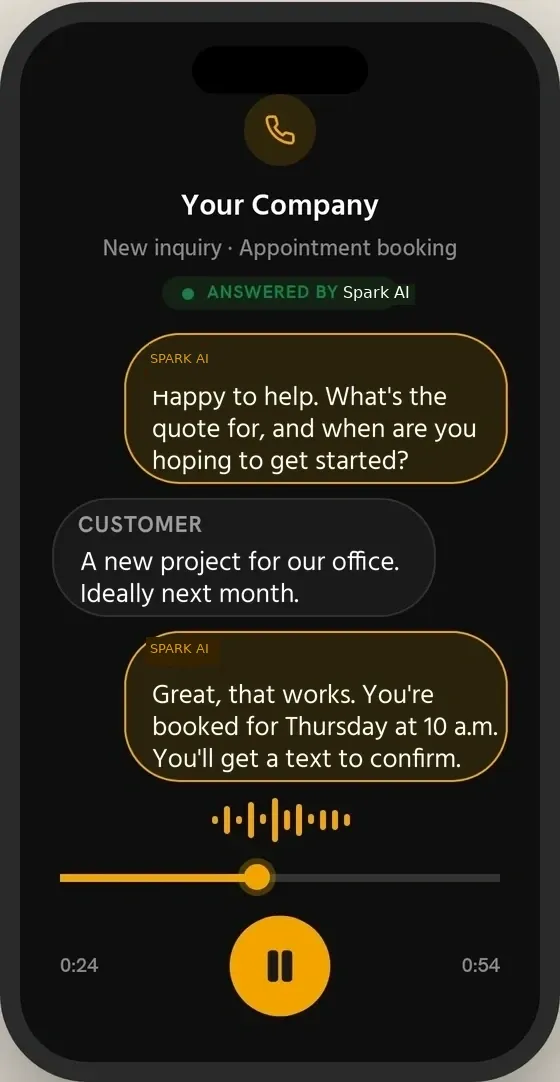
Spark AI receptionist and assistant (optional add-on)
Problem: after-hours calls went to voicemail — and most people never left a message.
Changed: Flooring Liquidators added Spark AI, which answers and books into the same CRM.
Effect: a caller at 9 pm becomes a booked measure in the morning's pipeline instead of a lost lead.
Also available in RUENGINE
Integrations
Connects to the tools the business already uses.
Workspace suite
Priced separately. One suite on your own domain: email, calendar, contacts, drive, office apps for documents, spreadsheets and presentations, and PDF tools.